
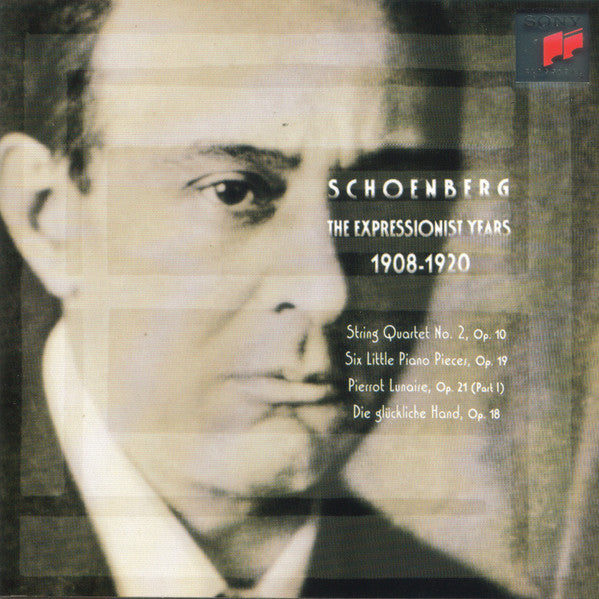


The Expressionist Years 1908-1920
Symbolic image – for the detailed description and condition, please read the Item Details below.
This collection captures Arnold Schoenberg during his most revolutionary period (1908-1920), when he abandoned tonality and developed techniques that would reshape modern music. The early String Quartet No. 2 moves toward atonality while retaining romantic warmth. Pierrot Lunaire, perhaps his most performed work, is a masterpiece of expressionist art—a setting of surreal poems for solo voice and chamber ensemble that remains startling and modern nearly a century later. The Six Little Piano Pieces demonstrate how much expressive content he could compress into miniature forms. Die Glückliche Hand reveals his theatrical ambitions. Together these works document music's most consequential revolution, from tonality's collapse to the emergence of serialism. Absolutely essential for understanding twentieth-century modernism and Schoenberg's epochal influence.
Item Details+
| Genre | Classical |
| Style | Expressionist, Chamber Music, Choral |
| Media | Near Mint (NM or M-) |
| Sleeve | Near Mint (NM or M-) |
| Description | Carefully packed and shipped with love from Vienna. Order more, save on shipping! |
| Label | Sony Classical |
| Year | 1995 |
| Country | Europe |
| Format | CD |
Tracklist+
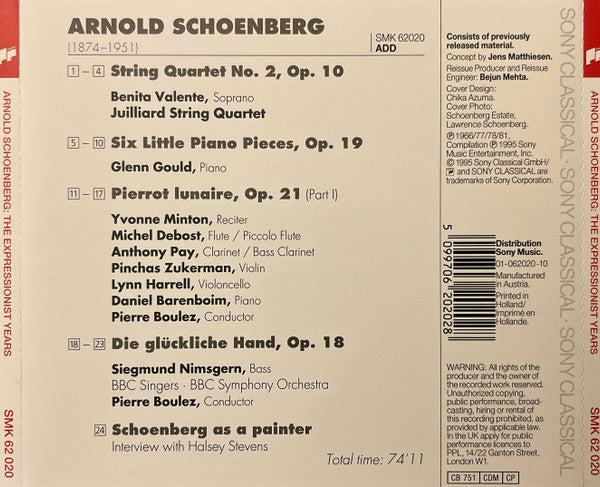
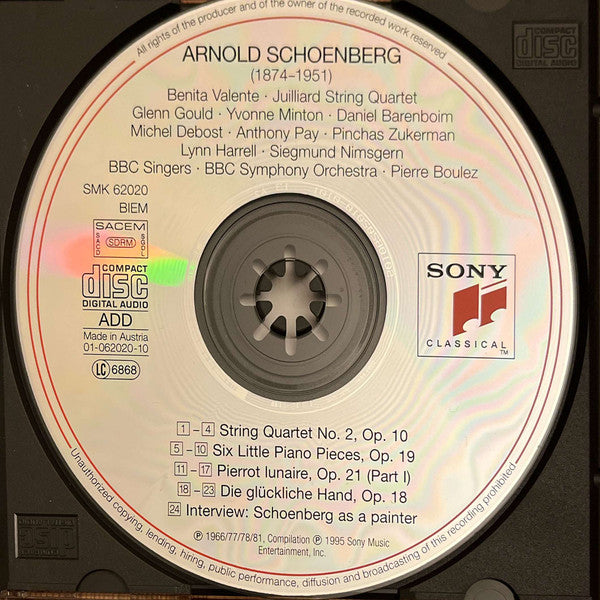
String Quartet No. 2, Op. 10
Six Little Piano Pieces, Op. 19
Pierrot Lunaire, Op. 21 (Part I)
Die Gluckliche Hand, Op. 18
24. Schoenberg As A Painter 6:23
Data provided by Discogs.
You may also like
-
 NM
NM -
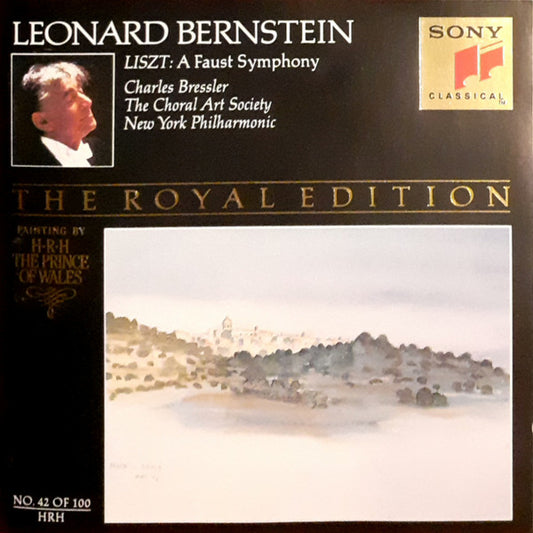
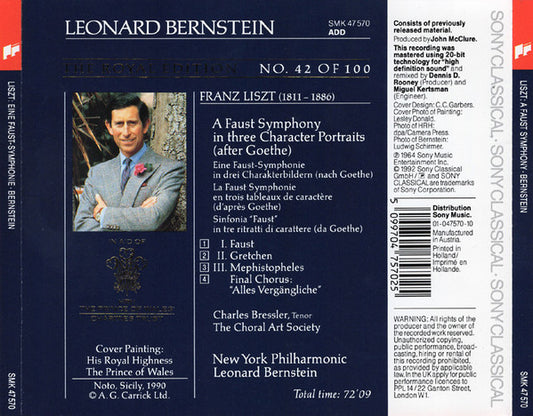
A Faust Symphony
정가 €9,99 EUR정가단가 단위 -
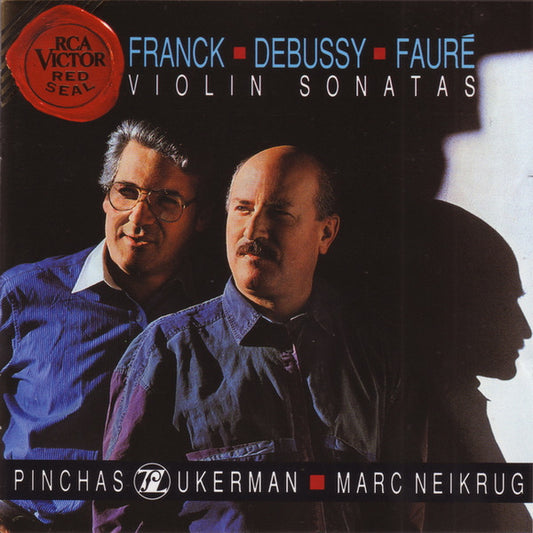
 NM
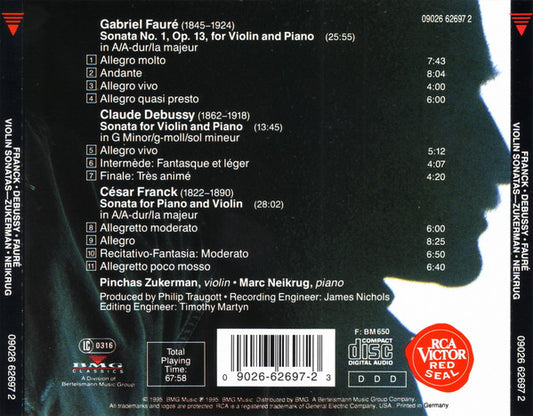
NMViolin Sonatas
정가 €4,99 EUR정가단가 단위 -
 VG+
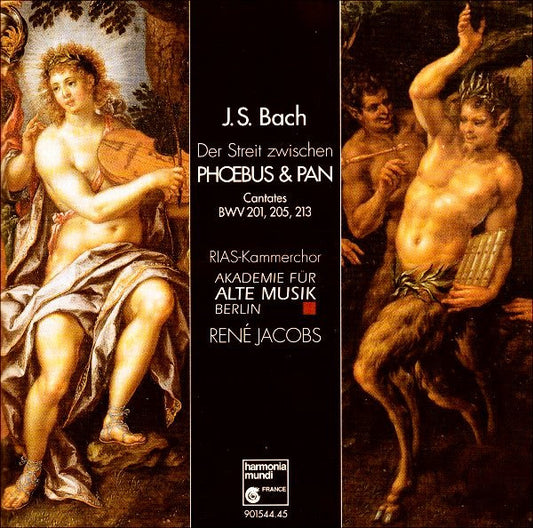
VG+Phoebus & Pan • Cantates BWV 201, 205, 213
정가 €9,99 EUR정가단가 단위
